
U.S. Vice President JD Vance said Sunday there was an opportunity to “turn over a new leaf” with Iran as the sides launched talks aimed at building out the interim deal to end the war in Iran reached by the two sides last week.
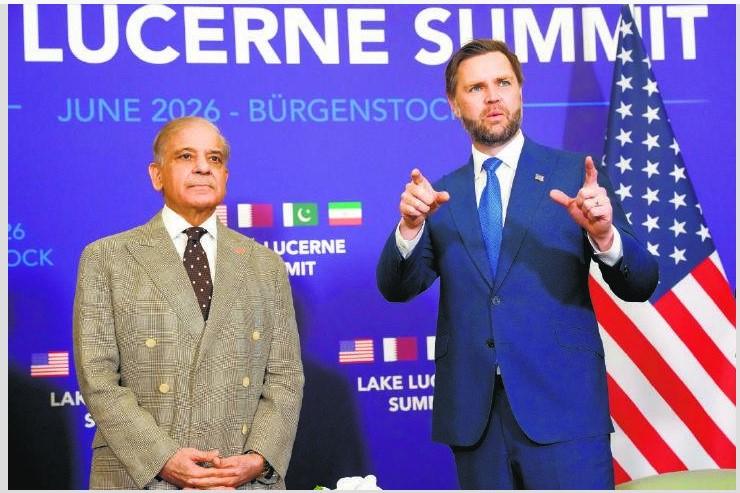
Vance is holding talks with Iran's parliamentary speaker, Mohammad Bagher Qalibaf, and Foreign Minister Abbas Araghchi, at a Swiss mountainside resort near Lake Lucerne. Mediators from Pakistan and Qatar were also in the room for the direct engagement.
The U.S. is looking to get Iran locked into negotiations over its nuclear program amid concerns it may be used for military purposes, which Iran denies. Vance also wants to push Tehran to commit to keeping open the Strait of Hormuz, the critical waterway through which about a fifth of world traded oil passes.
But the on-again, off-again conflict in Lebanon, between Israel and Iranian-backed Hezbollah militants, continues to threaten to derail the effort for the U.S. to win concessions from Tehran on its nuclear program and keep the Strait of Hormuz open.
“The question before us now is how much more can we accomplish together? Can we turn over a new leaf?” Vance said in brief comments as the talks, dubbed the “Lake Lucerne Summit,” got underway.
“Can we change relations in the Middle East permanently, or do we go back to doing things the old way, which is not our preference, but is certainly very much something that can happen.”
Iran first wants to focus on Israeli strikes in Lebanon
Iran’s main focus during negotiations on Sunday would be the ongoing war between Israel and Hezbollah in Lebanon, Iranian Foreign Ministry spokesman Esmail Baghaei told Iran’s state news agency ahead of the meeting with Vance.
The interim agreement was signed last week, and now top American and Iranian negotiators are in a 60-day sprint to reach an agreement on the technical details that hold massive implications for the world economy and global security.
Yet only days after signing the agreement, it is being stress-tested after fighting escalated in Lebanon between Israel and the Iranian-backed militant group Hezbollah — and by the subsequent announcement by Iran’s military that it had again closed the vital waterway that transits one-fifth of the world’s traded oil and natural gas. A renewed ceasefire in Lebanon, brokered on Saturday, appeared to be holding.
Vance stressed that “great progress” had been made on Lebanon. But minutes after he was finished speaking, President Donald Trump took to social media to threaten Iran if it didn't rein in Hezbollah.
"If they don’t, we’ll hit Iran very hard again, just like we did last week, only harder!!!” Trump wrote.
Iran is cautiously approaching the talks given its previous experience with the U.S. negotiations on the nuclear issue, which twice in the past year have been interrupted by massive military strikes against the country. “The implementation of any document is more important than its signing,” Baghaei said Sunday.
Iran’s president added that Iran will maintain its right to a nuclear program.
“What is certain is that we will never back down from the right to enrich uranium, and the other side is also forced to accept it,” Iranian President Masoud Pezeshkian said Sunday, according to Iran’s state media.