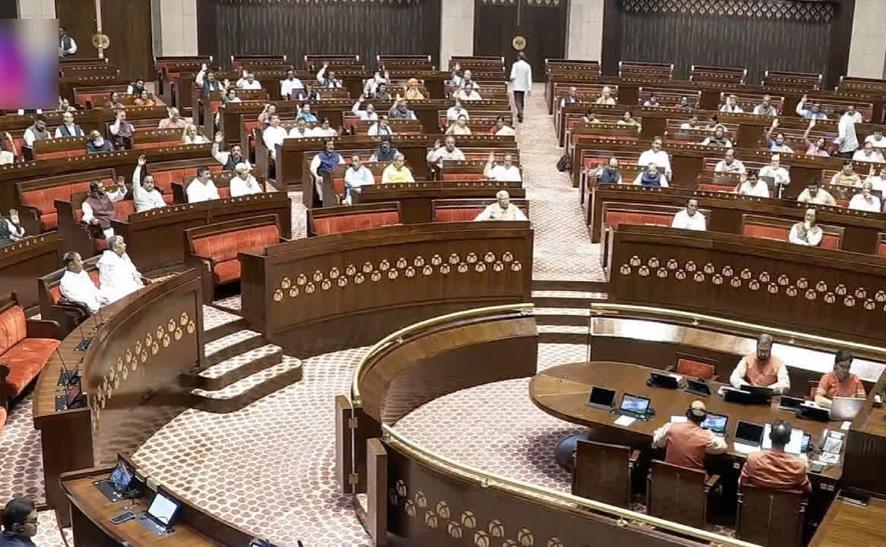

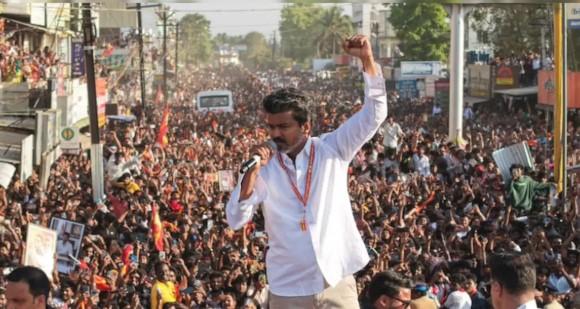
In a closely contested Tamil Nadu Assembly election, the Tamilaga Vettri Kazhagam (TVK) emerged as the single largest party with 108 seats in the 234-member House, falling short of the 118-seat majority mark. With no clear majority, the state appears headed for intense political negotiations as TVK explores three possible pathways to form a stable government.
Scenario 1: DMK-aligned smaller parties join TVK to form a coalition government
In the first and most straightforward option, TVK is considering stitching together support from smaller allies traditionally aligned with the DMK camp.
Potential composition:
TVK: 108
Congress: 5
Left parties: 4
IUML: 2
VCK: 2
Under this arrangement, smaller regional and ideological partners would provide the crucial numbers needed to cross the majority threshold, enabling a coalition government led by TVK with a broader alliance base. According to party sources, TVK has begun talks with the Congress, PMK, and Left parties in this regard.
Scenario 2: Cross-alliance coalition drawing from DMK and AIADMK camps
The second scenario under discussion is a more unconventional, cross-bloc arrangement involving selective support from both major rival alliances.
Potential composition:
TVK: 108
Congress: 5
PMK: 4
IUML: 2
VCK: 2
This model reflects a pragmatic, issue-based coalition approach, bringing together smaller parties from both the DMK and AIADMK ecosystems. The idea reportedly includes offering cabinet representation to all supporting partners to ensure stability despite the fragile majority arithmetic.
Scenario 3: External support from AIADMK for a minimal stable government
The third and most politically significant option involves securing outside support from the AIADMK, avoiding a broad coalition altogether.
Potential composition:
TVK: 108
AIADMK: 47
In this arrangement, TVK would form the government with backing from AIADMK, relying on a simplified power-sharing understanding rather than a full coalition structure. This could potentially offer greater internal stability and fewer coalition-management challenges, despite ideological differences between the parties.