
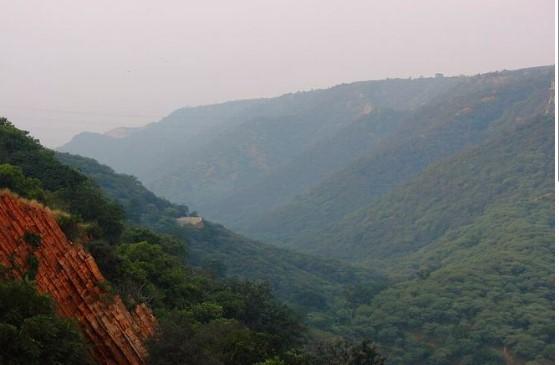
The Supreme Court on Monday placed in abeyance its November 20 verdict that had established a uniform definition of the Aravalli hills and ranges, signaling a pause in the judicial directives designed to protect the world’s oldest mountain system.
A vacation bench, comprising Chief Justice of India Surya Kant and justices J.K. Maheshwari and Augustine George Masih, indicated its intention to constitute a high-powered committee of domain experts to undertake a meticulous and holistic examination of the Aravallis’ topography, ecology, and conservation imperatives.
“We deem it necessary to direct that the recommendations submitted by the committee, together with the findings and directions stipulated by this court in the judgment of 20 November 2025, be kept in abeyance,” the bench stated while hearing the suo motu case titled In Re: Definition of Aravalli Hills and Ranges and Ancillary Issues.
The apex court emphasised that several points require careful clarification and issued a notice to the Centre and other concerned parties, posting the matter for further hearing on 21 January.
The 20 November order had accepted the Ministry of Environment, Forest and Climate Change’s committee recommendations, defining “Aravalli Hill” as any landform in designated districts with an elevation of 100 metres or more above local relief, and an “Aravalli Range” as two or more such hills within 500 metres of each other. The ruling also prohibited fresh mining leases within these areas until expert reports were finalised.
The committee had elaborated that an Aravalli Hill comprises not only the elevated landform but also its supporting slopes and associated terrain, while the interstitial land between adjacent hills, along with hillocks and slopes, constitutes part of the Aravalli Range. These detailed definitions were intended to ensure clarity in demarcating core, inviolate, and buffer zones.
The apex court’s November judgment, spanning 29 pages, arose from long-standing environmental litigation in the T.N. Godavarman Thirumulpad case. It had also accepted recommendations for sustainable mining practices, prohibition of mining in protected areas, and measures to prevent illegal extraction across the Aravallis.
By pausing the earlier directives, the Supreme Court signals a careful, deliberate approach, aiming to reconcile ecological preservation with developmental concerns, while awaiting the expert panel’s comprehensive report.