
Senior Ladakh leader and former MP Thupstan Chhewang on Saturday urged the region’s political and social leadership to build on the progress made in recent talks with the Centre instead of returning to the streets, saying the latest engagement with the Union Ministry of Home Affairs (MHA) produced several positive outcomes.
Chhewang, who resigned as chairman of the Leh Apex Body (LAB) in July last year after leading the agitation for demands including statehood and extension of the Sixth Schedule of the Constitution to Ladakh, participated in the September 9 meeting with the MHA sub-committee.
Immediately after the talks, the LAB and the Kargil Democratic Alliance (KDA) leadership expressed disappointment over the outcome, saying the government failed to produce the much-awaited draft on a proposed elected body for the Union Territory.
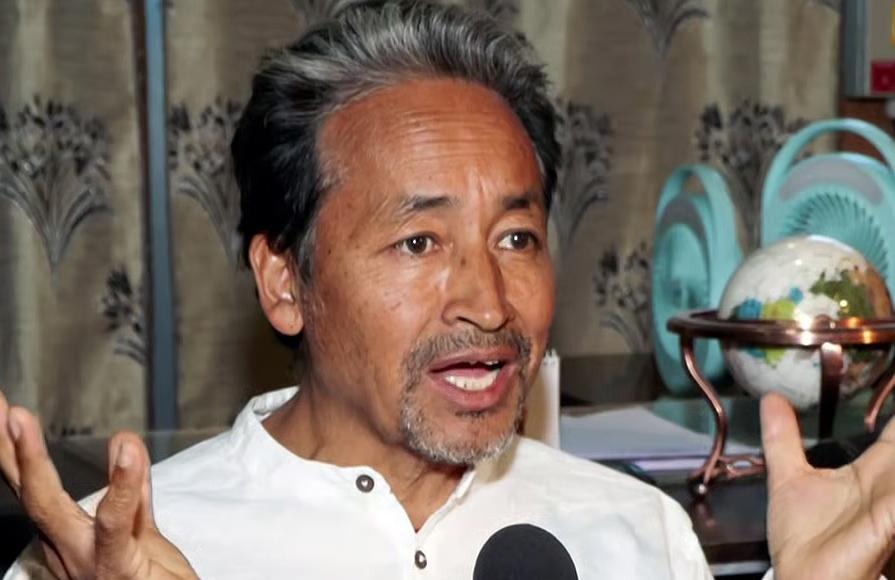
Climate activist and Leh Apex Body (LAB) member Sonam Wangchuk said there has been “no special progress” since the May 22 meeting. He warned that the Ladakh groups could resume agitation if major decisions were taken before an elected democratic body is established.
Addressing reporters in Leh, Chhewang said the recent meeting between the LAB, KDA and the Union Ministry of Home Affairs (MHA) was “fruitful” and witnessed positive discussions on several key issues concerning the Union Territory of Ladakh.
He expressed disappointment over how the meeting’s outcome was presented to the public by the LAB and the KDA, noting that several positive developments and points of consensus discussed during the meeting were not brought before the people.
“The Centre and Ladakh representatives had discussed a possible institutional mechanism at the Union Territory level, along with its powers, composition and electoral framework,” he said, adding the proposed body could have a role in matters such as land, culture, environment and mineral resources, besides having financial powers.The question of representation, including provisions reflecting Ladakh’s tribal character, was also part of the deliberations.
Chhewang stated that he had generally refrained from appearing in public on these matters but felt compelled to speak out now because of the “positive developments” achieved after several rounds of discussions.The recruitment and constitutional safeguards had been discussed extensively, he said, adding that a consensus emerged on several aspects, including the demand for safeguards under Article 371, which was discussed during the May 22 meeting.
He mentioned that while demands for statehood and inclusion under the Sixth Schedule remained part of the broader political discourse, discussions eventually moved towards finding practical constitutional and administrative safeguards for Ladakh.
Highlighting the recent MHA meeting, Chhewang said the proposed UT-level representative body was among the major issues discussed.
He said the LAB and the KDA discussed direct elections, and several options were considered regarding the electoral mechanism.He also emphasised Ladakh’s tribal character and said that, given the presence of Scheduled Tribes, there should be adequate representation and provisions for nomination in the proposed system
The issue of constituencies and ensuring equal representation and rights across areas was also discussed, with suggestions sought from the participants, he said.
Chhewang said that the discussions had reached a stage where there was a clear understanding that the proposed UT-level body should be taken forward.
He claimed that the delay in moving forward was not from the MHA side but from differences within the LAB and KDA over the sequencing and implementation of the proposed institutions.
The former MP also criticised Wangchuk’s ‘call’ for renewed agitation, including an ultimatum linked to the fulfilment of Ladakh’s demands.
He questioned the need for another agitation when progress had been made through dialogue with the MHA. “Ladakh had already witnessed the serious consequences of the September 24 incident and warned against any development that could lead to a repeat of such a situation,” he said.
In a pointed statement, Chhewang said that if Wangchuk and the Apex Body still wanted to continue with agitation, they should consider holding it in Kargil, which had greater interest in pursuing certain demands. “Leh witnessed the struggles over the years, while Kargil benefited from the developments that followed the movement,” he said.
Chhewang appealed to the LAB and Wangchuk to exercise responsibility and avoid any action that could create another tense situation in Ladakh.
“The recent MHA dialogue should be viewed in the context of the progress made through negotiations,” he said, adding the focus should now be on finalising the proposed UT-level body, strengthening district councils, securing constitutional safeguards and moving forward through an agreed institutional framework, rather than returning immediately to confrontation.