
Ladakh has begun channelising 90 million litres of glacier water daily to enhance water security and agricultural productivity across 1,000 acres of land.
Led by Lieutenant Governor Vinai Kumar Saxena, this initiative utilises glacial-melt water from Stok village Nallah in Leh, which previously flowed unused into the River Indus. The water is now diverted into the Igoo-Phey Irrigation Canal, benefiting approximately 12 villages.
The project employs simple earthworks to redirect glacial runoff without any capital expenditure, marking a significant step toward a green, water-secure, and self-sustaining Ladakh.
Although Ladakh has abundant glacier and snowmelt resources, much of its cultivable land has historically suffered from irrigation shortages, limiting rural livelihoods. LG Saxena identified sites where large volumes of glacier water were draining unused into the Indus River, selecting Stok village Nallah as a prime location for diversion into existing infrastructure.
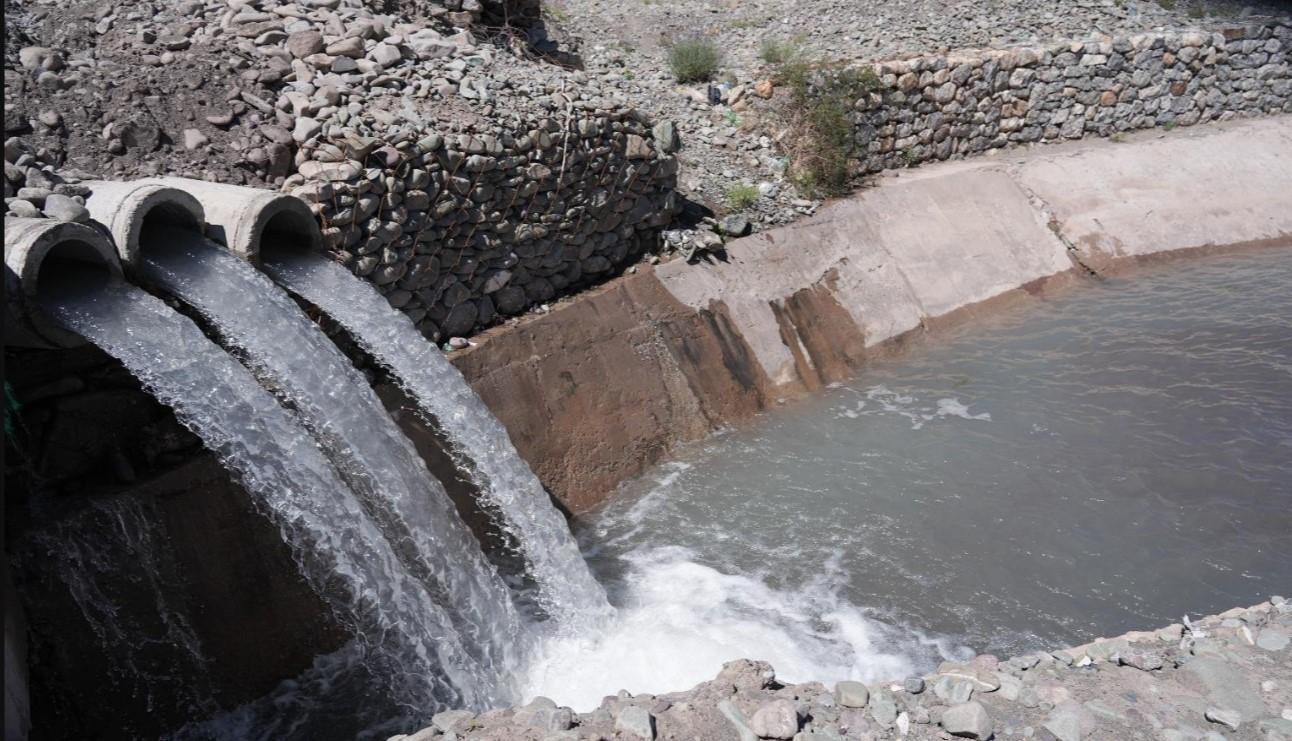
On August 14, following Saxena’s directives, the Irrigation and Flood Control Department created two trenches with a JCB to divert excess glacier water from the main channel of Stok Nallah to the Igoo-Phey Canal. The Nallah’s discharge was measured at approximately 36.60 cusecs (each cusec equals 28.32 litres per second), amounting to about 90 million litres over 24 hours.
Two diversions channel 19 cusecs toward Igoo village and 7 cusecs toward Phey village, increasing canal inflow by 26 cusecs. Plans are underway to utilise the remaining 10 cusecs.
The 43-kilometre Igoo-Phey Canal, constructed between 1979 and 2005, includes an underground segment allowing Stok Nallah water to flow above it. Despite this infrastructure, the potential for water diversion was not exploited until this initiative, leading to chronic water shortages and canal underuse.
The intervention raises the canal’s water flow from 50 to nearly 80 cusecs, ending previous roster-based water distribution and ensuring daily supply to all 12 villages served by the canal.
Farmers are expected to see improved crop yields, higher incomes, and enhanced employment opportunities, contributing to a revitalised rural economy.
LG Saxena stated, “By successfully saving 90 million litres of glacier water daily and diverting this huge volume from the Stok Nallah into the Igoo Phey and Yokyur canals, we have proven that large-scale, sustainable water management is entirely feasible in our cold desert. This is a monumental step toward our vision of a Green, Water-Secure, and Self-Sustaining Ladakh.” He added that this initiative is a blueprint for expanding cost-effective water management across Ladakh.
The administration plans similar interventions across the Union Territory, targeting streams such as Matho Nallah, Tuchik Chenmo Nallah, Tuchik Chon Nallah, and Stakna Nallah. These projects will use gravity-based engineering to minimise waste and uphold environmental sustainability.
Through integrating scattered glacier flows with irrigation infrastructure, this decentralised water management model aims to enhance agricultural prosperity, expand irrigated areas, increase crop intensity, and stimulate economic growth by raising farm incomes and employment.