
The Department of Science & Technology, Government of Jammu & Kashmir, has strongly countered the news item published in Daily Rising Kashmir on March 31, 2026, which presents an incomplete and outdated picture of solar energy development in the Union Territory. In a rebuttal issued here today in this regard, the department has clarified that the figure of 79.48 MW solar capacity cited in the article is not reflective of the current status. "As of March 2026, the installed solar capacity in Jammu & Kashmir, including rooftop systems, off-grid, hybrid and ground-mounted projects, has crossed 250 MW," the communique said.
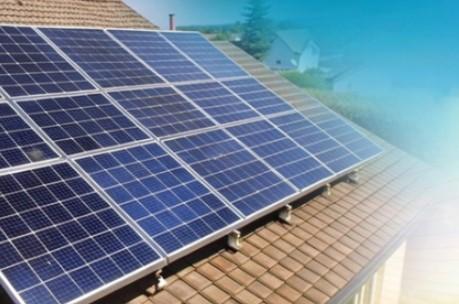
The department highlighted that solar energy development in J&K has witnessed a rapid upward trajectory, growing from about 49 MW in 2021 to over 80 MW by 2023 and is further accelerating under flagship initiatives such as the PM Surya Ghar: Muft Bijli Yojana. "The pace of expansion clearly demonstrates that solar energy is emerging as one of the fastest-growing components of the Union Territory's energy mix," the statement added.
The department termed the comparison drawn in the article between 3629 MW of hydropower and 79.48 MW of solar energy as misleading. "Hydropower infrastructure in J&K has evolved over several decades and includes 3360 MW of large hydro projects. In contrast, solar deployment in the UT has gained momentum only in the last 3-5 years. Comparing a legacy sector with an emerging one, without accounting for temporal and structural differences, results in a distorted narrative," the statement said.
The department pointed out that when focusing specifically on the renewable segment, the small hydro component stands at only about 269 MW, making the comparison with solar energy more balanced and contextually appropriate. "Even within this framework, solar energy is exhibiting a much higher rate of growth," the document added.
The department also highlighted the geographical and topographical constraints of Jammu & Kashmir, stating that development of large-scale solar parks requires substantial contiguous land (approximately 3000-4000 kanal for a 100 MW project), which is difficult to secure in a predominantly hilly terrain. "Consequently, the UT has strategically prioritized decentralized rooftop solar installations, which are better suited to the local conditions," the statement said.The department provided details of the PM KUSUM scheme, stating that Rs 15.45 crore had been released in 2022-23, of which, Rs 484.08 Lakh were utilised during the financial year and the remaining 10.41 crore were revalidated and expended on the scheme during 2023-24.Despite these inherent challenges, the government is actively promoting solar adoption through targeted schemes, financial incentives and policy support and the recent surge in installations reflects improved implementation and growing public participation.