
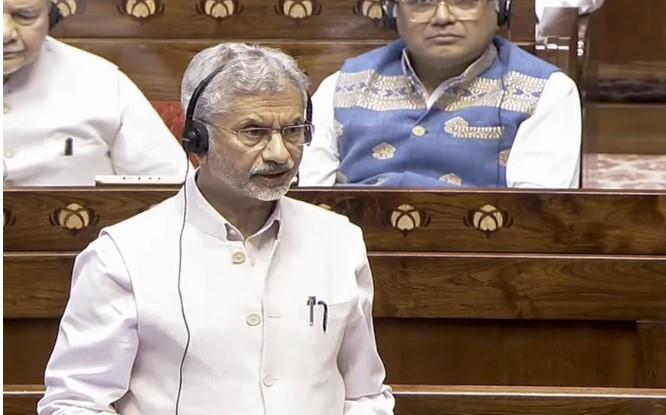
Dialogue and diplomacy are the only way out of the Middle East crisis, and the government is closely monitoring developments in the region that is home to millions of Indians, External Affairs Minister Dr S Jaishankar said in Parliament today.
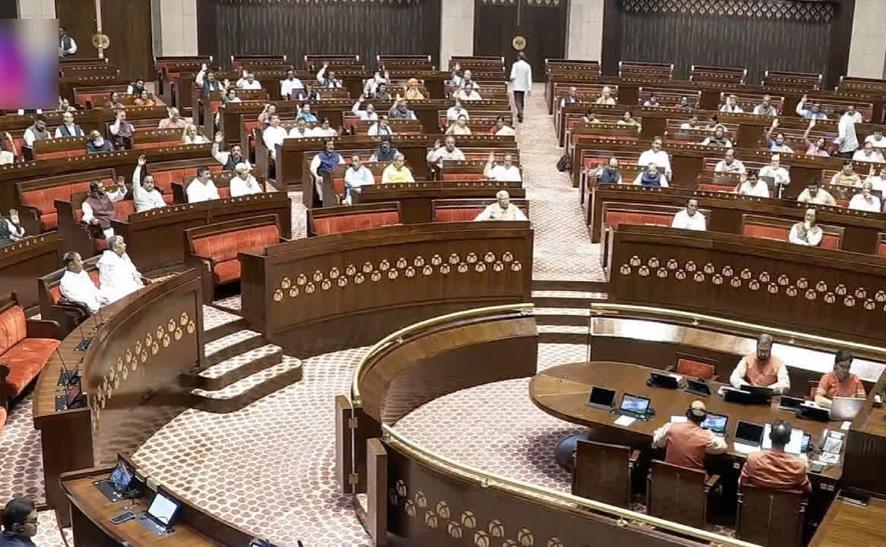
Addressing the Rajya Sabha amid loud protests from the Opposition benches, the External Affairs Minister said the ongoing conflict has intensified the security situation in the region. "The Prime Minister is closely monitoring the developments. We continue to believe that dialogue and diplomacy should be pursued to de-escalate the tensions. We want West Asia to remain stable. Millions of Indians are in the Gulf countries. We are concerned about them."
Earlier, Congress president Mallikarjun Kharge spoke about the impact of the conflict on the lives of Indians working in the Gulf region, and on global fuel prices.
In his address, Dr Jaishankar said that the conflict has led to numerous casualties, including at the leadership level in Iran. Stressing that dialogue is the way forward, he said, "It is also imperative that the sovereignty and territorial integrity of all states in the region be respected." The Cabinet Committee of Security, he said, met on March 1 on the conflict. "The CCS was concerned over the safety and security of the Indian community in the region. It also focused on implications for regional security and for economic and commercial activities," he said.
The Middle East, Dr Jaishankar said, is key to India's energy security and includes many important suppliers of oil and gas. "The Gulf is also an important trade partner, amounting to almost 200 billion US dollars annually."
Speaking about the deaths of two Indians in the conflict, he said, "We have sadly already lost two Indian mariners and one remains missing."
The minister said India has been closely monitoring the situation in the region since the 12-day war last year. "On January 5, 2026, Indian nationals were advised by the Ministry of External Affairs to avoid non-essential travel to Iran. Those residing there were advised to register with the embassy, exercise due caution, and monitor the embassy's website and social media handles," he said, adding that another advisory was issued on January 14, reiterating the earlier one. Advisories were also issued for shipping companies, asking them not to deploy Indians in the region, he said.
Dr Jaishankar said the Indian embassy in Tehran issued another advisory on February 14, urging Indian nationals, including students, pilgrims, business persons, and tourists, to leave Iran by all available means of transport, and this was reiterated through another advisory a week later. "Some heeded these advisories and left the country. However, many others have disregarded them and remain in Iran... Once the conflict commenced, the Indian embassy facilitated the relocation of several Indian students in Tehran," he said, adding that helplines have also been set up for those stranded in the middle of the conflict. "We are totally committed to supporting the Indian community in difficult moments," he said, adding that Indian embassies in all the countries in the region have issued advisories regarding the situation to keep Indians updated.
The minister said that the government has approved and undertaken commercial flights to bring back stranded Indians from wherever there has been a partial opening of airspace. "So I want to assure the House that every effort is being made that those who are stuck in the region, those who are transit passengers who are there, those who need to come back urgently from this region, we are making every effort for them to do so," he said.
Dr Jaishankar said the government is committed to ensuring India's energy security. "For us, the interests of the Indian consumer has and will always be the overriding priority. Where required, Indian diplomacy has supported the endeavours of our energy enterprises in this volatile situation," he said.
"Hon'ble Chairman Sir, let me conclude by highlighting the three guiding factors of our approach: (i) India is in favour of peace and urges a return to dialogue and diplomacy. We advocate de-escalation, restraint and ensuring the safety of civilians (ii) The well-being and security of the Indian community in the region is our priority. We will continue to work with the Governments of the region towards that end. (iii) Our national interest, including energy security and trade flows, will always be paramount," Dr Jaishankar said.