
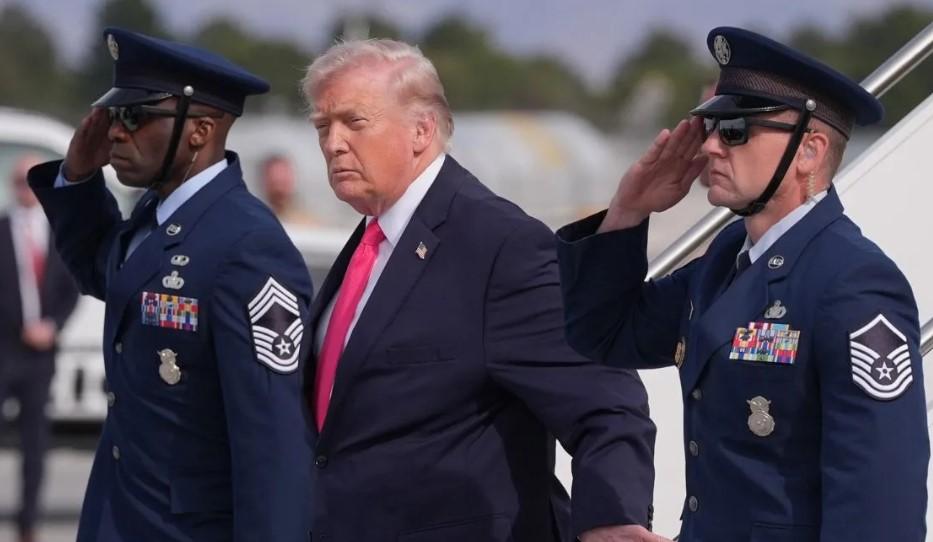
US President Donald Trump has indefinitely extended the ceasefire with Iran at the request of mediator Pakistan, saying the move was aimed at giving Tehran’s fractured leadership time to come up with a unified proposal to end the seven-week war.
The dramatic announcement came just hours before the two-week ceasefire announced on April 8 was set to expire, and effectively delayed the planned visit of a US delegation led by Vice President J D Vance to Islamabad for peace talks with Iranian interlocutors.
However, Trump made it clear that the US will refrain from attacking Iran only until its leadership presents a unified proposal for negotiations. He said the economic blockade of Iran’s ports will remain in place.
Vance and US special envoys Steve Witkoff and Jared Kushner had been scheduled to travel to Islamabad on Tuesday, but the White House said the delegation’s “trip to Pakistan will not be happening today (Tuesday).”
“Based on the fact that the Government of Iran is seriously fractured, not unexpectedly so and, upon the request of Field Marshal Asim Munir, and Prime Minister Shehbaz Sharif, of Pakistan, we have been asked to hold our Attack on the Country of Iran until such time as their leaders and representatives can come up with a unified proposal,” Trump said in a statement on Tuesday.
The US President said he had “therefore directed our Military to continue the Blockade and, in all other respects, remain ready and able, and will therefore extend the Ceasefire until such time as their proposal is submitted, and discussions are concluded, one way or the other”.
The announcement capped days of intense diplomatic activity among officials in Washington, Islamabad and Tehran aimed at producing a draft proposal acceptable to all sides.
Witkoff and Kushner were due to leave Miami for Islamabad on Tuesday morning but were instead asked to join “additional meetings” at the White House. Vance, who was also scheduled to travel to Pakistan, joined the deliberations in Washington.
The decision to extend the ceasefire marked a significant shift in Trump’s tone. Earlier on Tuesday, he said that if a deal was not reached by Wednesday, he expected to “be bombing, because that is a better attitude to go in with.” He added that the military was “raring to go.”
Trump made no reference to the conflict or the negotiations with Iran during his only public appearance of the day, when he addressed NCAA collegiate national champions at the White House on Tuesday afternoon.
Pakistan Prime Minister Shehbaz Sharif thanked Trump for extending the ceasefire with Iran and expressed hope that both sides would be able to “conclude a comprehensive peace deal” to end the conflict.
Following Trump’s announcement, Sharif in a post on X, said, “On my personal behalf and on behalf of Field Marshal Syed Asim Munir, I sincerely thank President Trump for graciously accepting our request to extend the ceasefire to allow ongoing diplomatic efforts to take their course.”
Sharif said that with the “trust and confidence reposed in (it), Pakistan shall continue its earnest efforts for a negotiated settlement of the conflict.”
“I sincerely hope that both sides will continue to observe the ceasefire and be able to conclude a comprehensive ‘Peace Deal’ during the second round of talks scheduled at Islamabad for a permanent end to the conflict,” he added.
Meanwhile, Treasury Secretary Scott Bessent announced sanctions on 14 individuals, entities and aircraft based in Iran, Turkiye and the United Arab Emirates for their alleged involvement in procuring or transporting weapons or weapons components on behalf of the Iranian regime.
“The Iranian regime must be held accountable for its extortion of global energy markets and indiscriminate targeting of civilians with missiles and drones,” Bessent said.
He warned that Iran’s Kharg Island storage facilities could reach capacity within days, potentially forcing fragile oil wells to shut down.
“Constraining Iran’s maritime trade directly targets the regime’s primary revenue lifelines,” he said.
“The @USTreasury will continue to apply maximum pressure through Economic Fury to systematically degrade Tehran’s ability to generate, move and repatriate funds. Any person or vessel facilitating these flows—through covert trade and finance—risks exposure to US sanctions,” Bessent added.
The US imposed the blockade to pressure Tehran into ending its stranglehold on the Strait of Hormuz, a key shipping lane through which about 20 per cent of the world’s natural gas and crude oil transits in peacetime.
Iran’s grip on the strait has pushed oil prices sharply higher. Brent crude, the international benchmark, was trading close to USD 95 per barrel on Tuesday, up more than 30 per cent since February 28, the day Israel and the US launched strikes on Iran, triggering the war.
On Tuesday, the US also said its forces boarded an oil tanker previously sanctioned for smuggling Iranian crude in Asia. The Pentagon said in a social media post that US forces boarded the M/T Tifani without incident.
The US military did not disclose the location of the boarding, though ship-tracking data showed the vessel in the Indian Ocean between Sri Lanka and Indonesia on Tuesday. The Pentagon added that international waters are not a refuge for sanctioned vessels.