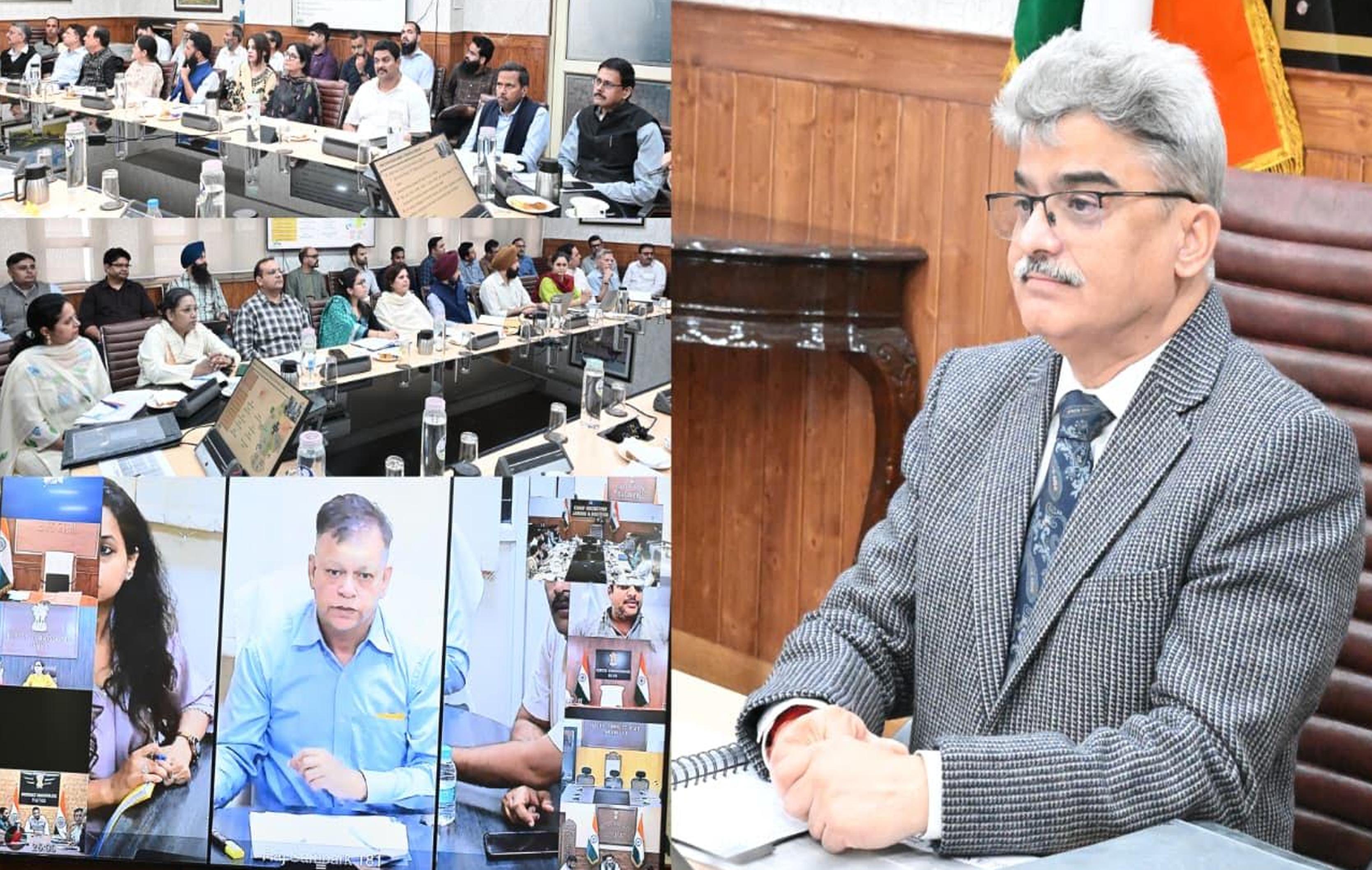

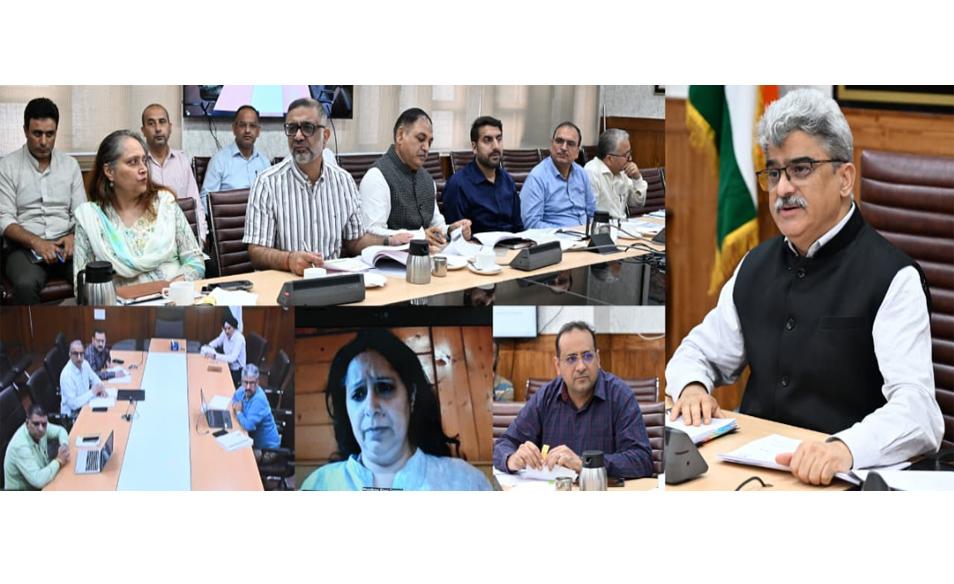
Chief Secretary, Atal Dulloo, today chaired a meeting of the concerned Administrative Secretaries to review the progress achieved under the next phase of the Ease of Doing Business (EoDB) programme and assess the implementation status of the identified deregulation and compliance reduction reforms across Jammu and Kashmir.
The meeting was convened to evaluate the progress of priority reforms being coordinated by the Department of Industries & Commerce under Phase-II of the Compliance Reduction and Deregulation initiative.
During the meeting, the Chief Secretary undertook a department-wise review of the identified reform measures and impressed upon all Administrative Secretaries to ensure their timely implementation in a coordinated manner.
He emphasized that reducing unnecessary regulatory burdens, simplifying procedures and improving the overall business ecosystem are essential for fostering investment, entrepreneurship and economic growth in the Union Territory.
While reviewing the pending reforms, the Chief Secretary directed the concerned departments to address outstanding issues expeditiously, particularly those requiring reconsideration or acceptance on the central portal, so that all identified reforms are completed within the stipulated timelines.
The Commissioner Secretary, Industries & Commerce, Vikramjit Singh took this occasion to reveal that out of the 28 identified Priority Areas (PAs) under the reform programme, nine reforms have already been accepted by the Government of India as fully implemented, while sixteen reforms are presently under implementation by the concerned departments. One reform is awaiting acceptance on the national portal by the Deregulation Cell, whereas two reforms have been returned for reconsideration.
Giving out the details the Director, I&C Jammu, Arun Manhas divulged that the reforms already accepted include liberalisation of regulations governing shops and commercial establishments, enhancement of the frequency of SEAC/SEIAA meetings along with creation of a land bank for degraded forests, elimination of minimum land requirements for private universities, rationalisation of infrastructure norms for non-government higher educational institutions, appointment of a single nodal agency for healthcare-related licences, monitoring and reduction of turnaround time on the Single Window System.
Additionally it was brought out that the establishment of an auto-appeal mechanism under the Right to Services framework, adoption of the amended Water (Prevention and Control of Pollution) Act, 2024, and compilation of testing facilities in government institutions for facilitating MSMEs had also been accepted by the Deregulation Cell of the GoI.
The Chief Secretary also reviewed the reforms proposed to be operationalised through bringing of a legislation. These include elimination of change in land use requirements for landowners, demand-driven zoning, optimisation of industrial land use, removal of dual licences for businesses, strengthening of MSME self-certification mechanisms.
In addition to that the simplification of medical practitioners' registration procedures, introduction of an affidavit-based clearance system also comes under the proposed Right to Business framework, and the Omnibus Bill aimed at harmonising various regulatory provisions.
The meeting further reviewed the status of other important reforms relating to streamlining of building permission processes, simplification of licensing under the Weights and Measures framework, promotion of quality and affordable tourist accommodation and removal of regulatory requirements relating to private schools.
Concerned departments apprised the Chair regarding the present status and timelines for completion of these reforms.
Reiterating the Government's commitment to create a transparent, predictable and investor-friendly regulatory framework, the Chief Secretary observed that effective implementation of these reforms would significantly enhance the ease of doing business in Jammu and Kashmir, reduce compliance burdens on businesses and strengthen the our competitiveness as an attractive investment destination.